


Chris Sta. Brigida-Kopp: What We Leave the Next Generation—Legacy, Language, and the Search for a Softer Future
Words by Mye Mulingtapang | Photos courtesy of Chris Sta. Brigida-Kopp
Editor's Note:
This article is Part III of a special three-part Pride Month editorial series by In The Mix Magazine exploring queer Filipino identity, migration, fatherhood, legacy, and belonging through an extended conversation with Filipino LGBT Europe founder Chris Sta. Brigida-Kopp.
Chris Sta. Brigida-Kopp has spent years building communities across Europe, but his deepest reflections are no longer only about advocacy. They are about legacy—what we pass on through language, family, and the courage to live authentically.

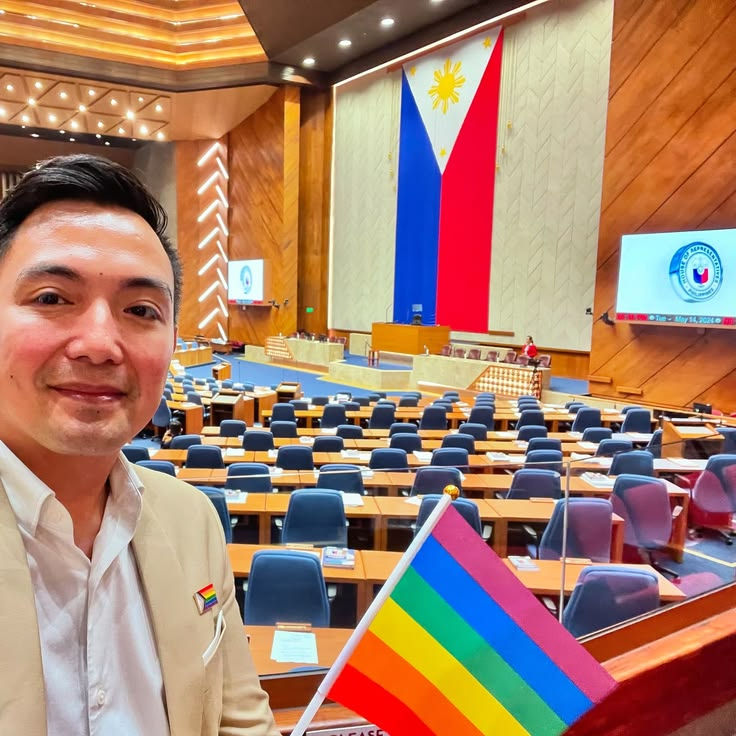
Chris Sta. Brigida-Kopp and the Language We Leave Behind
For Chris Sta. Brigida-Kopp, becoming a father transformed not only his understanding of family but also his definition of strength, responsibility, and belonging.
The first thing Brigida-Kopp looks for whenever he returns to the Philippines is not a luxury resort, a celebrated restaurant, or a destination featured in travel brochures. He heads for bookstores. More specifically, he searches for children's books written in Tagalog.
Again and again, he leaves with the same disappointment.
"Ang hirap maghanap ng children's books in Tagalog," he says.
To someone who has never lived far from home, the frustration may seem minor. For migrants, however, it reveals something much deeper. Distance changes the meaning of language. It is no longer simply a way of communicating; it becomes memory, continuity, and inheritance. It is one of the few bridges capable of carrying a family's history across generations.
Today, Sta. Brigida-Kopp's daughter is growing up in a home where several languages coexist. He speaks Tagalog to her. His husband speaks Austrian German. Her mother speaks Dutch. Their household reflects the layered realities of modern migration, where identities are not replaced but accumulated.
"She constantly picks up a book and quietly comes to me saying, 'Please read for me, Tatay," he says.
There is nothing extraordinary about the scene itself. A father reading to his child happens every day in countless homes around the world. Yet for migrant families, these ordinary moments often carry extraordinary significance.
"I want to tell her who I am by reading to her in Tagalog."
In that simple sentence lies one of migration's quietest anxieties. Identity rarely disappears all at once. It fades gradually—a language spoken less often, family stories left untranslated, traditions no longer explained because no books, songs, or conversations remain to carry them forward.
For many overseas Filipinos, the fear is not simply living far from home. It is wondering whether the next generation will still recognise home when they encounter it.
Will they understand where they came from? Will they see themselves reflected in Filipino stories? Will they inherit confidence—or shame?
Sta. Brigida-Kopp insists he is not trying to "break barriers or prove anything." He simply wants the tools to speak to his daughter in the language that first taught him who he was.
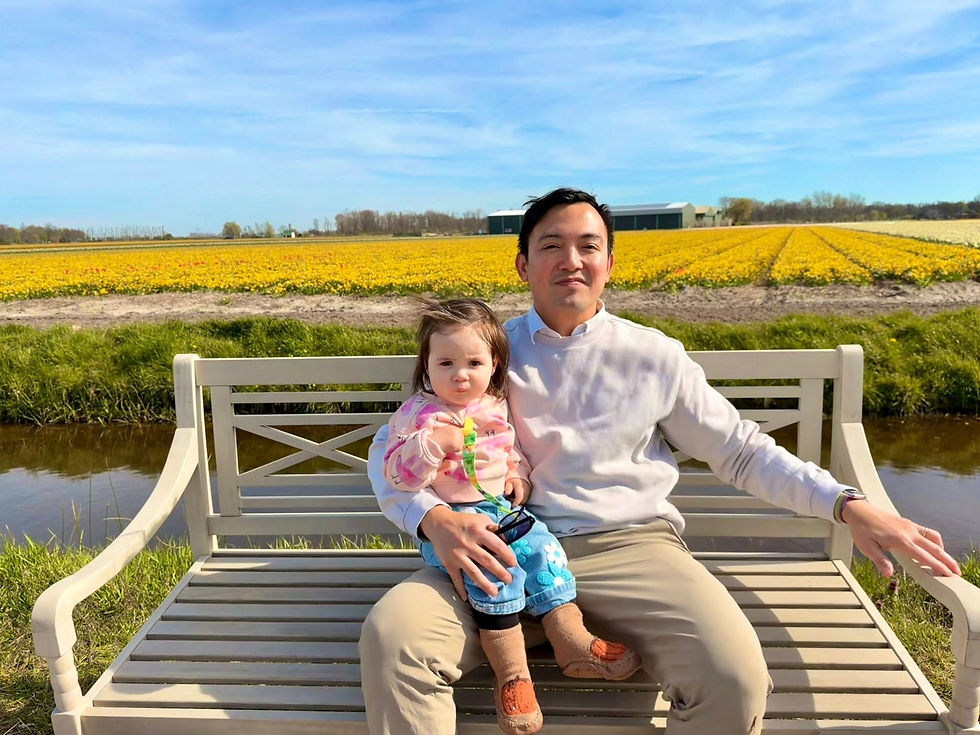
Redefining Legacy
That quiet aspiration says as much about legacy as any award or public recognition ever could.
Legacy is often measured by achievements, titles, organisations founded, or causes championed. Yet migration has a way of changing those calculations. As years pass, many people begin asking different questions.
With time, the questions become less about achievement and more about inheritance.
Not what we accomplished, but what remains after us. Do our children inherit courage instead of fear? Do they recognise the stories that shaped us? And do they enter the world knowing they already belong, long before anyone asks them to prove it?
Those questions become especially significant when Sta. Brigida-Kopp reflects on representation.
Growing up, he rarely encountered queer Filipinos portrayed with complexity or dignity.
"Most of the time," he recalls, "they were portrayed merely as comic relief."
Representation matters because children build their understanding of possibility by observing the lives they see around them. When every familiar story ends in ridicule, rejection, or tragedy, it becomes difficult to imagine a future shaped by joy.
Kopp believes this is one reason queer Filipino narratives have so often begun with secrecy, shame, or survival.
"Yun kasi ang bumebenta," he says matter-of-factly.
Pain attracts attention. Conflict sustains drama. Over time, audiences begin accepting those narratives as inevitable rather than constructed.
The danger is not simply repetition. It is expectation. When suffering becomes the dominant narrative, people begin believing it is the natural condition of queer life. Kopp refuses that conclusion.
"There are stories about happiness, stable relationships, family, friendship, success, faith, ageing, and ordinary life."
Ordinary life.
Perhaps that remains one of the quietest ambitions behind decades of LGBTQIA+ advocacy—not celebrity or exceptionalism, but the freedom to love openly, raise children, grow older, and participate in society without constantly defending one's existence.
Visibility as Reassurance
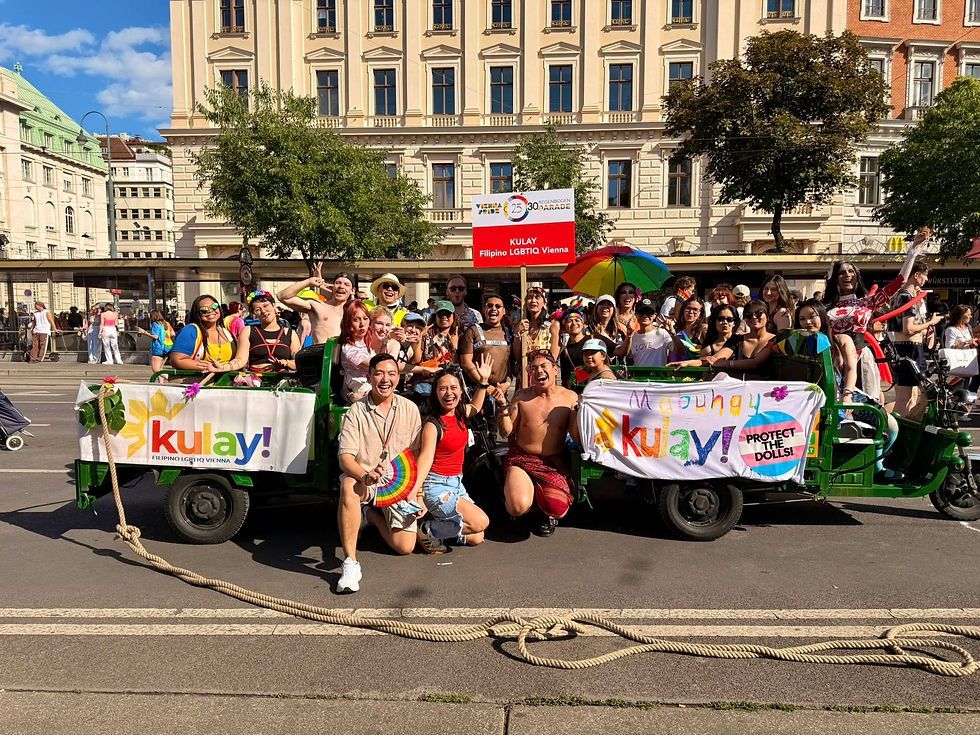
That hope surfaces repeatedly whenever Sta. Brigida-Kopp speaks about Pride. For more than twenty-five years, he has marched through cities across Europe carrying something unmistakably Filipino—often the Philippine flag itself.
"Importante sa akin iyon."
The gesture is less about symbolism than communication. It is a message directed toward young Filipinos still growing up in silence, wondering whether they belong, and searching for someone who has walked the path before them.
"I want to communicate directly to fellow Filipinos, and especially to the Philippine government, that we also exist and that we need to be seen and heard."
Then comes one of the interview's most revealing reflections.
"If I had encountered stories like ours earlier in life, I think I would have felt less alone, less afraid, and less confused about my place in the world."
Representation, in that sense, is not a marketing strategy or a corporate slogan. Sometimes it is simply reassurance. Proof that another future is possible. Somewhere, another young Filipino is quietly watching, wondering whether the life they imagine can ever become real.
Sta. Brigida-Kopp understands that uncertainty because he once stood on the sidelines himself, watching his first Pride march in London before finding the courage to step into it. Today, he has become part of the visibility he once searched for.
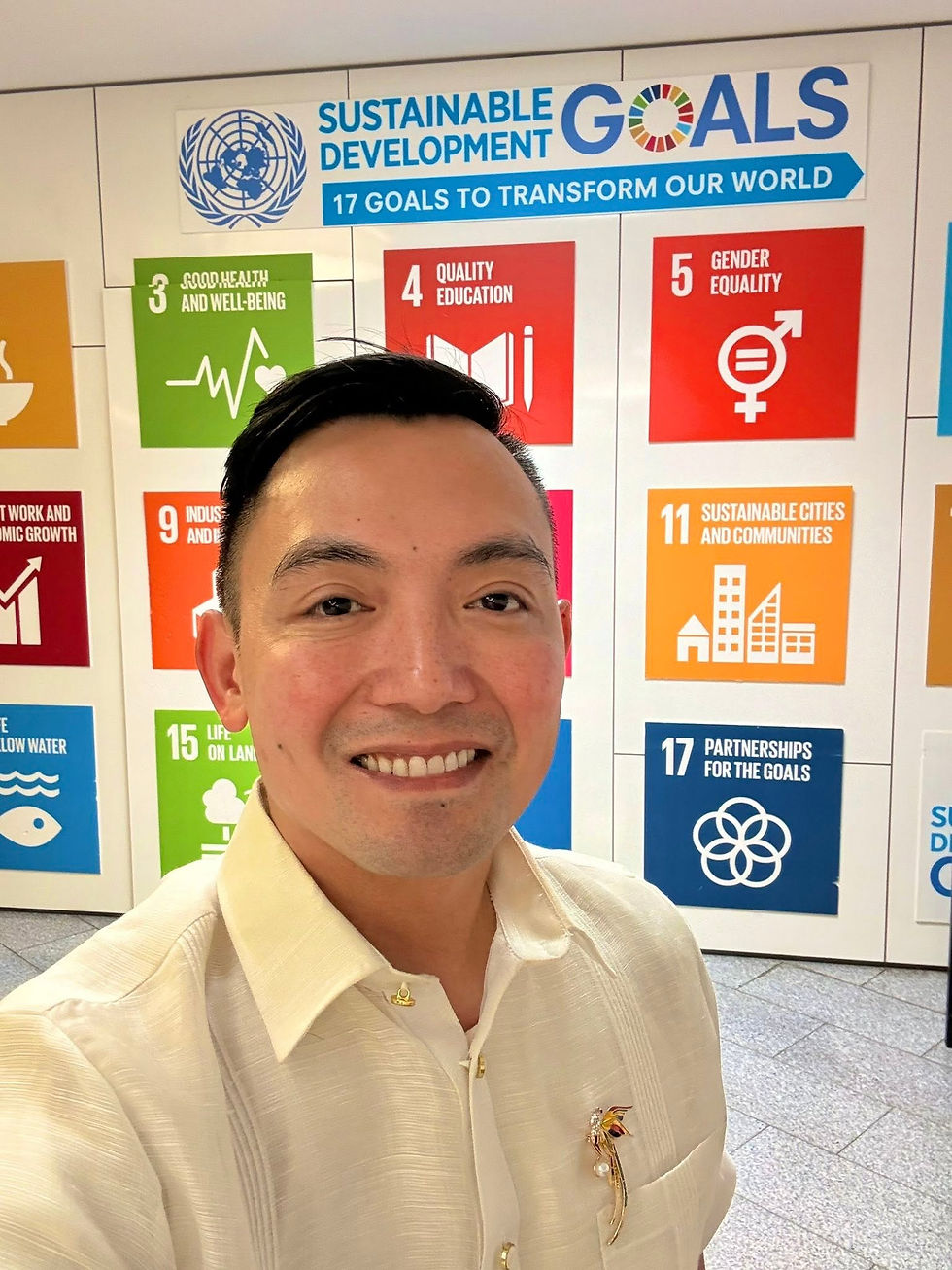
A Legacy Measured in Belonging
Sta. Brigida-Kopp's reflections never drift toward triumph. He speaks instead with the realism of someone who understands how uneven opportunity remains.
"Not everyone has had the same opportunities I have had in life."
Not everyone can leave. Not everyone can access legal protections, education, or supportive communities. That awareness reshapes how he defines legacy.
"Legacy is more about a sense of belonging, a sense of worth, and what remains in the lives of the people we have touched."
It is a definition rooted less in institutions than in relationships. Not what did you build? But who felt less alone because you were here?
"Did we help create spaces where people felt safe enough to become themselves?"
That question extends far beyond LGBTQIA+ communities. It speaks to migrants navigating unfamiliar countries, children growing up between cultures, and anyone who has ever learned to silence parts of themselves simply to be accepted.
From Survival to Stewardship
When asked whether he has forgiven the people and systems that once made him feel invisible, Sta. Brigida-Kopp answers with characteristic restraint.
"I grew up with the Catholic teaching of forgiveness."
Then he pauses.
"Forgiveness does not mean pretending that nothing happened."
Rather than allowing those experiences to define him, he transformed them into responsibility.
"I learned how to speak up, to question, and to stand up for myself in ways I could not before."
That may be the most meaningful transformation of all. Not the journey from invisibility to visibility. But from survival to stewardship.
The child who once learned to hide the softness of his hands has become a father determined that his own daughter will never mistake acceptance for something she must earn.
The Future Pride Is Fighting For
When Sta. Brigida-Kopp imagines the future, he does not speak first about advocacy, recognition, or political victories. He speaks about love.
"I want her to know that having her in our life was one of the best decisions we ever made."
Then his perspective widens once more—from one child to an entire generation.
"Everything we fought for was rooted in love."
Perhaps that is the quiet truth running beneath this entire series. Pride has never been only about visibility. It has always been about expanding the boundaries of who gets to belong. It is about creating a world where children inherit possibility instead of silence, confidence instead of shame, and tenderness instead of fear.
For generations of queer Filipinos, survival was often the first lesson. Sta. Brigida-Kopp hopes it will no longer be the first lesson for those who come after.
If that future arrives, Pride will no longer be remembered only for the marches that filled city streets each June. It will also be remembered for something quieter and far more enduring: a generation that transformed visibility into belonging—and belonging into a legacy of love strong enough to be inherited.
Looking back, Chris Sta. Brigida-Kopp sees advocacy as more than public visibility. It is the quiet work of creating a future where the next generation grows up with less fear and more freedom to belong.
Support Filipino LGBT Europe
Visibility alone is not protection. For many queer Filipinos abroad, safety, representation, legal support, mental health advocacy, and community are still fragile realities shaped by migration, race, labor, and survival.
Organisations like Filipino LGBT Europe continue to create spaces where queer Filipinos across Europe can exist more openly, organise collectively, celebrate culture, and fight for dignity without shrinking themselves.
If this story moved you, consider supporting their work through donations, partnerships, volunteering, or simply helping amplify their mission because Pride is not sustained by visibility alone. It survives through community, protection, and people willing to keep showing up for one another.

Ngày nào mình cũng ngó qua mấy kênh soi cầu XSMB/MB trước giờ quay để bắt nhịp, chứ sát giờ mới xem thì dễ cuống. Mình hay ghép dự đoán XSMB với thống kê lô gan và lô xiên để nhìn ra hướng đi của dàn số, đỡ đoán theo cảm giác. Trong nhóm cũng có người khuyên nên quay thử rồi đối chiếu lại dữ liệu cũ để xem tần suất có hợp lý không, nhất là khi kết hợp thêm vài công cụ kiểu quay thử XSMB hay Rồng Bạch Kim. https://soicauxsmb.pro/ mình chỉ lướt để so sánh thêm thôi, không bao giờ tin mỗi một nguồn. Nói chung dự đoán miền Bắc vẫn phải cân giữa cầu…
Mình chơi xổ số kiểu cho vui là chính, nên thường chỉ ngó kết quả để giải trí chứ không đặt nặng chuyện phải trúng. Trước đây nghe người ta bàn về “cầu” này “cầu” kia mình cũng nghi nghi, nhưng theo dõi một thời gian thì thỉnh thoảng thấy có vài dạng lặp lại nên cũng tò mò. Mỗi lần đọc mấy bài soi thử, mình hay ghi lại vài con hoặc vài ý rồi chờ kết quả ra để tự kiểm tra xem có bị tâm lý dẫn dắt không. Dạo gần đây mình đôi lúc lướt qua https://soicauxsmb.io/lo-khung-song-thu-3-ngay.html để có thêm góc nhìn, nhưng chỉ xem tham khảo thôi. Có hôm trúng chút thì vui, còn nhiều…