


From Kusina to the Base: How Filipino Food Won Over Americans in Italy
Words By Mye Mulingtapang | Photos courtesy of Maria Suzette Odulio-Pine
The skin cracks under the knife before anyone says a word. What began as a small kitchen operation would eventually become proof that Filipino food won over Americans not through spectacle, but through repetition, consistency, and reliability. Adobo, lumpia, and lechon stopped being unfamiliar dishes and became part of everyday routine. People form a line without being told. There is no explanation of what anything is. There doesn’t need to be. A man in a U.S. Air Force uniform steps forward, reaches for the lumpia, and moves on like this is part of a routine he has already learned.

THE SYSTEM BEFORE THE BRAND
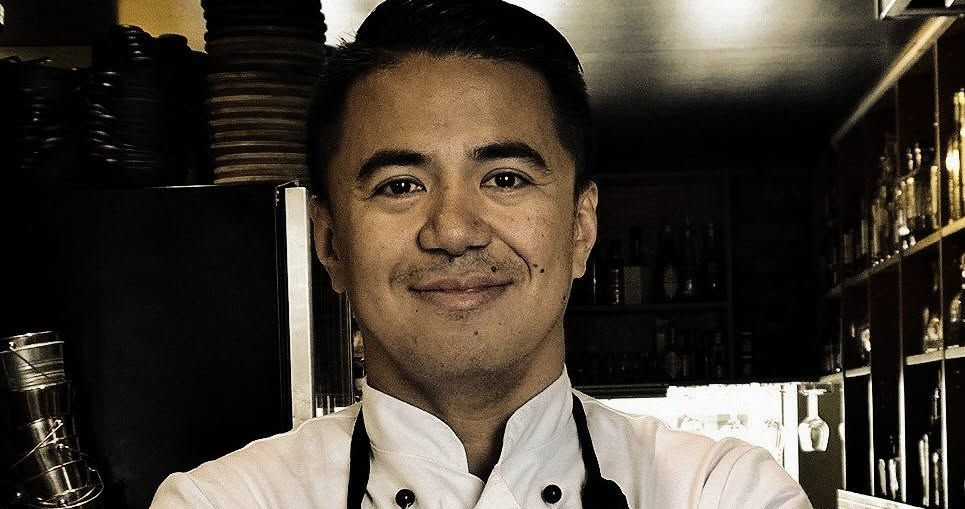
What Kusina by Lasang Pine-Oy, led by Maria Suzette Odulio-Pine and husband Aldrin Pine, built did not begin as a restaurant in the traditional sense. It began as movement during a time when movement was restricted. Food was prepared in one kitchen and sent out to multiple homes, not as a product but as a response to a specific moment when people were isolated and routines were disrupted. There was no structured business model at the start, no clear scaling plan, and no aesthetic consideration beyond what was necessary to get the food out intact. What existed instead was repetition—orders coming in again, then again, then more consistently until the operation could no longer remain informal.
That shift from informal to structured created its own pressure. The same food that initially solved access began to create expectation. Once people rely on something, inconsistency is no longer tolerated. Portions have to be stable, flavoUrs have to be exact, timing has to align with demand. At that point, the work stops being personal and becomes operational. The kitchen is no longer feeding people it knows; it is feeding a system that measures value in reliability rather than intention.
The turning point did not come from a single decision but from a pattern that became impossible to ignore.
The customer base expanded beyond the Filipino community into a broader, more mixed environment where the food was no longer treated as unfamiliar. It became an option, then a preference, and eventually something integrated into routine, particularly within the American base nearby. That integration marked a shift in function. The food was no longer bridging a gap; it had entered a new system and was expected to perform within it.
Scaling to meet that demand required trade-offs that are rarely acknowledged directly. Time was the first to go, particularly the kind of time that allows for experimentation and variation.


We didn’t start with a business plan. We started with a need -- and we kept showing up. -MARIA SUZETTE ODULIO-PINE
THE COST OF CONSISTENCY
Recipes that once depended on instinct had to be standardiSed so they could be executed consistently by different hands. Control over every detail became less precise as production increased. More critically, adjustments had to be made in response to a broader market—levels of salt, acidity, and intensity were recalibrated not to dilute the food entirely, but to make it legible to customers encountering it for the first time. This is where authenticity stops functioning as a fixed idea and becomes a series of decisions about what can change and what must remain.
In its current form, the operation is defined by volume and consistency. Multiple trays move at once, orders are fulfilled in cycles, and the kitchen functions with the efficiency of a system rather than the pace of a traditional dining space.
Customers no longer ask what adobo is or how lumpia is made. They order it directly, often alongside other familiar items, without needing explanation. This shift from curiosity to routine is the clearest indicator of integration. The food is no longer positioned as something o be discovered; it is something to be relied on. 6 At the same time, not everything translates. Certain elements are adjusted—presentation becomes more contained, portions more structured, flavors slightly calibrated—but core components remain intact.


The balance within adobo is preserved even when it risks being too strong for some customers. The structure of lumpia remains precise, resisting modification beyond what is necessary for scale. This balance between adaptation and resistance defines how the food operates in a foreign context.
It is not replicated exactly as it exists in the Philippines, but neither is it reshaped entirely to meet external expectations. What emerges from this process is not simply a story about cultural exchange or diaspora identity. It is a system of food that has proven capable of operating across different environments without losing its function. Filipino food in this context is not sustained by narrative or sentiment but by its ability to meet practical demands—durability, efficiency, consistency, and adaptability. These are the qualities that allow it to move from a home kitchen to a broader market, from informal distribution to structured operation, and from cultural reference point to everyday consumption.
The unresolved question sits beneath all of this: if the food can integrate this effectively into a system that was not built for it, what is being preserved in the process, and what is being gradually adjusted to ensure that integration continues? The answer is not immediate or visible, but it exists in every decision made in the kitchen—what is measured, what is modified, what is left unchanged, and what is allowed to evolve.


Comments