


Where the Bridge Crosses the River: Ann van Wijgerden’s Life in Tondo
Updated: Sep 10
In Tondo, Ann van Wijgerden learned that poverty could never tell the whole story. Between polluted rivers and crowded streets, she encountered children who turned scraps into art, families who found delight in giving, and communities built on interdependence—experiences that deepened her sense of belonging while forcing her to confront the limits of witnessing another person’s life.
Words by Mye Mulingtapang
Photos courtesy of Young Focus/Instagram
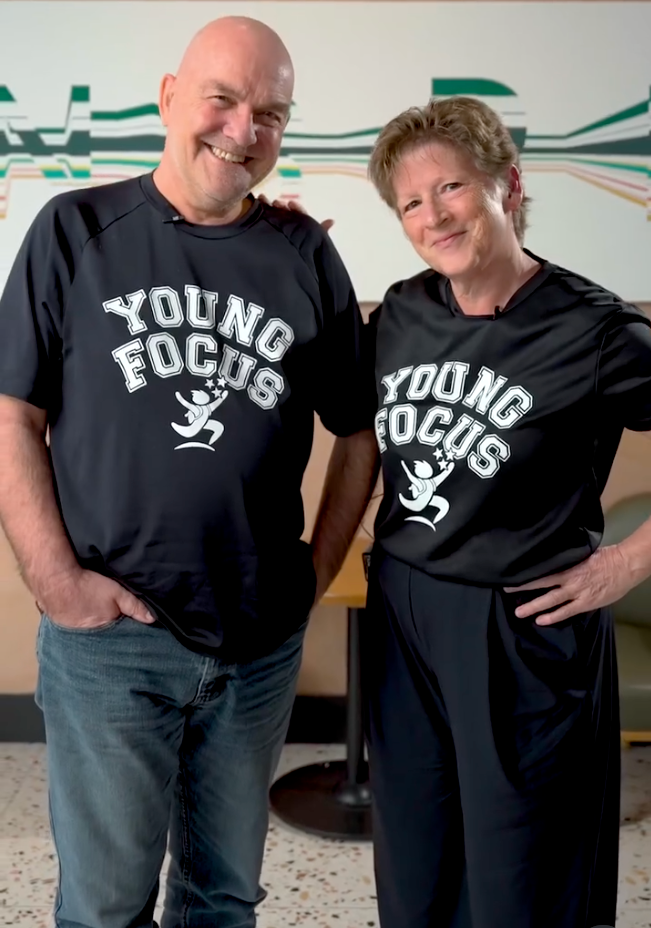
Some places leave behind a particular image, one that returns years later with surprising clarity. For Ann van Wijgerden, one of those images is a bridge in Tondo.
Below it runs a river so polluted that she describes it, without euphemism, as "basically a flowing sewer." She jokes that dipping even her big toe into the water would probably make her seriously ill. The children she watched from the bridge seemed to see the river differently. They jumped in laughing, surfaced shouting, splashed one another, climbed out, and did it all over again.
Years later, the scene still stays with her.
It would be easy to call what she witnessed resilience, but the word can become too comfortable when used to describe people who have learned to live with hardship. It can turn endurance into something admirable while drawing attention away from the conditions that made such endurance necessary. What struck Van Wijgerden was simpler and, perhaps, harder to explain: these were children finding a way to remain children. The river was polluted. Their joy was real. Neither truth cancelled out the other.
That tension would become familiar during her years in Tondo.
On her earliest visits, she noticed many of the things an outsider would notice first—the crowded streets, precarious homes, polluted waterways, and other visible signs of poverty. But Young Focus brought her back to the same communities week after week, then year after year. Familiarity changed the landscape. Streets that had once seemed defined by hardship became places where she knew people. Children she used to pass on the way to the Young Focus centre began greeting her by name. Families welcomed her into homes where there was little room and often little money, yet somehow always hospitality.
The poverty had not become less visible. If anything, knowing the people who lived within it made the inequality more difficult to accept.
Head Up, Head Down
Van Wijgerden has an image for what it feels like to walk through those neighbourhoods.
"I sometimes feel like I'm swimming breaststroke," she says. "Head up, smiling, returning their greetings; head down, hiding my grief and/or anger that people still have to live this way."
It captures something she has never quite reconciled: the warmth of the people she meets and the anger she feels about the conditions surrounding them. The greetings are genuine. So is the grief.
"I never want to 'get used to it,'" she says. "I never want to accept it, that humans have to live like rats."
That refusal matters because Van Wijgerden is wary of turning poverty into a story about inspirational people overcoming adversity. She has witnessed extraordinary resilience, certainly, but she does not want admiration for resilience to soften the reality that people should not have been forced to develop so much of it in the first place. Dignity can exist alongside deprivation without making deprivation acceptable.
Over the years, what caught her attention increasingly were the qualities that poverty could neither explain nor erase.
The physical landscape makes inequality impossible to ignore. Yet for Van Wijgerden, knowing the peo Young boy holding trash toward the camera while standing amid debris and makeshift structur
Making Something Out of Nothing
She remembers one of Young Focus's early camps outside Manila, where the children were divided into groups and given what must have seemed an improbable assignment. With almost no materials and very little time, each team had to produce a flag, a banner, a song, and a dance.
Within an hour, they had performances.
"They can magic something out of nothing," she says.
She would see that same instinct repeatedly. It surfaced in music and dance, painting and theatre, photography, writing, cooking. Young Focus eventually developed Saturday workshops where children could explore those talents more fully, but the workshops did not create the creativity. They simply gave it somewhere to go.
The distinction stayed with her. Talent was abundant. Opportunity was not.
Another Meaning of Independence
Her years in Tondo also unsettled assumptions she had carried from Europe, particularly about what it means to build a successful life. Growing up in Britain and later living in the Netherlands, she had absorbed a familiar Western ideal: children grow up, become self-sufficient, leave home, and learn to stand on their own. Independence is often treated as evidence that adulthood has been achieved.
Among the families she came to know in Manila, life worked differently. Grandparents helped raise grandchildren. Siblings supported one another. Cousins, neighbours, and extended family stepped in when illness, unemployment, or another crisis arrived. Sometimes this was cultural; often it was economic necessity. When formal systems offered little protection, people became one another's safety net.
Van Wijgerden does not romanticize this either. She is quick to acknowledge that every culture has strengths as well as blind spots. Still, the Filipino emphasis on interdependence made her reconsider the assumption that needing other people is somehow the opposite of succeeding.
One particular act of generosity has stayed with her.
A close friend learned that her older brother was seriously ill and facing a hospital bill the family could barely afford. The woman herself had very little, yet she immediately offered what she could.
Van Wijgerden remembers being struck not simply by the fact that she gave, but by the pleasure with which she did it. Her friend did not talk about the money as a sacrifice. She was happy that, in that moment, she had something she could share.
The encounter complicated Van Wijgerden's understanding of generosity. Giving did not necessarily begin with having plenty. In the communities she had come to know, it could emerge from scarcity itself, sustained by an understanding that whatever one person possessed existed, at least partly, in relationship to other people.
When the Same Uniform Means Something Different
There were harder lessons too.
Living and working in Tondo made her aware that even something as ordinary as seeing a police uniform could carry entirely different meanings depending on who was looking at it.
"If you're middle-class, or rich, or a foreigner," she says, "you see a police uniform and expect help."
For many of the families around her, the response could be very different.
"If you're poor," she continues, "you're afraid.
You know that police officer has your life in their hands."
The observation exposed a divide she could not easily forget. People might inhabit the same city and live under the same laws, yet experience authority, safety, and justice in profoundly different ways.
By then, Van Wijgerden had spent enough time in Tondo to know that these were not simply stories she could collect and carry away with her. They belonged first to the people who had lived them. Her closeness to the community allowed her to witness experiences she might otherwise never have understood, but closeness did not make those experiences her own.
Ann van Wijgerden in Tondo: The Limits of Witness
That distinction became increasingly important when she returned to poetry.
The Philippines had changed her life. The people she knew had changed the way she understood dignity, generosity, injustice, and belonging. Inevitably, some of that entered her writing. Yet another question followed close behind: what right did she have to write about experiences that were not hers?
The question became more urgent as the country entered the years of the Drug War. Van Wijgerden was no longer writing only about landscapes, private grief, or the ordinary intimacies of daily life. She was witnessing violence and fear that touched communities she cared about deeply while knowing that she herself occupied a very different position within that reality.
To remain silent carried its own discomfort. To speak for others carried another.
Somewhere between the two, she had to find a way to write.


The Life Behind the Book
By the time the poems that would become Dear Planet began finding one another, the Philippines was no longer simply a country Van Wijgerden had moved to or a place where she and Paul had chosen to work. Nearly two decades of friendships, classrooms, family celebrations, losses, and ordinary days had woven it into the fabric of her life.
Tondo was part of that story, but never the whole of it. The Philippines she came to know was made up of contradictions she could no longer separate neatly: polluted rivers where children still found reasons to laugh; poverty alongside startling generosity; creativity flourishing despite a shortage of opportunity; fear of authority existing beside deep trust within families and communities. Living among those contradictions changed the questions she asked of herself, and eventually the questions she brought to poetry.

In that sense, Dear Planet grew from more than observation. It emerged from years of relationships and from the uncomfortable recognition that loving a place does not grant ownership of its stories. Van Wijgerden could write about what the Philippines had done to her—how it had changed her understanding of community, justice, nature, and belonging—but she remained conscious that many of the experiences unfolding around her belonged first to other people.
That distinction would become increasingly difficult to navigate during the Drug War, when violence entered communities she knew and cared about. The writer who had once turned to poetry to make sense of her own life now faced a more complicated question: what could poetry responsibly say about suffering she had witnessed but had not personally endured?
There was no simple answer, and Dear Planet does not pretend to offer one.
Instead, the book carries the tension with it. Its poems grew from the life Van Wijgerden was living in the Philippines while acknowledging the limits of her position within that life. The country had become home in ways she could not have anticipated when she first arrived, but belonging, she came to understand, was not the same as possession. To belong somewhere could also mean knowing when to listen, when to speak, and when another person's story should remain theirs.
Perhaps that is why the collection feels less like a record of the Philippines than a record of what living here changed in its author. The streets of Tondo, the bridge, the children in the river, the students carrying schoolbags, the families who welcomed her inside—these encounters altered the direction of her attention. They taught her to look longer and to resist the easy story, particularly when writing about lives more vulnerable than her own.
Soon, that same attention would turn toward another landscape.
After days in Manila, Van Wijgerden would return home to Antipolo, where the density of the city gave way to trees, birdsong, insects, and forest. What initially offered refuge gradually became something more profound. Watching the natural world from her balcony, she began questioning another assumption she had carried for years: that she was standing outside nature, looking in.
The realization came quietly, much as the poems themselves had. She was not merely an observer. She was part of it. And that recognition would bring her closer to understanding what Dear Planet had been trying to say all along.
Editor's Note
This feature is presented in three parts to preserve the depth and narrative arc of Ann van Wijgerden's remarkable journey. Rather than condensing decades of reflection into a single article, this series follows the path that shaped Dear Planet—from a lifetime of writing and the communities of Tondo to the ethical questions of witness, belonging, and the natural world. We invite readers to experience the story as it unfolded: one chapter at a time.
Part I: The Poems That Waited
Part II: Where the Bridge Crosses the River
Part III: Becoming Part of the Story
Support the Dear Planet Project
Dear Planet is more than a collection of poetry—it is also an opportunity to give back. By purchasing a copy through the Dear Planet Project, readers can support the work of Young Focus, helping provide educational opportunities and support for children and young people living in underserved communities in the Philippines.
Buy the book. Read the poetry. Help create opportunities for children.
Continue the Conversation
Interested in Philippine literature and translation? Join the In The Mix Readers’ Network to receive selected readings, invitations to literary conversations and opportunities to connect with writers, translators and readers across the diaspora.

Comments