


History with Feeling: Jose Dalisay Jr. on What Fiction Preserves
Updated: Sep 10
Jose Dalisay Jr. explains how fiction gives history a human pulse, preserving the emotional and moral dimensions of the past without claiming to replace historical evidence.
“Fiction brings history down to human terms, to intimate scenes and speeches that reduce grand ideas and epochs to moments that engage not just the brain but the heart.” — Jose Dalisay Jr.
Words by Mye Mulingtapang
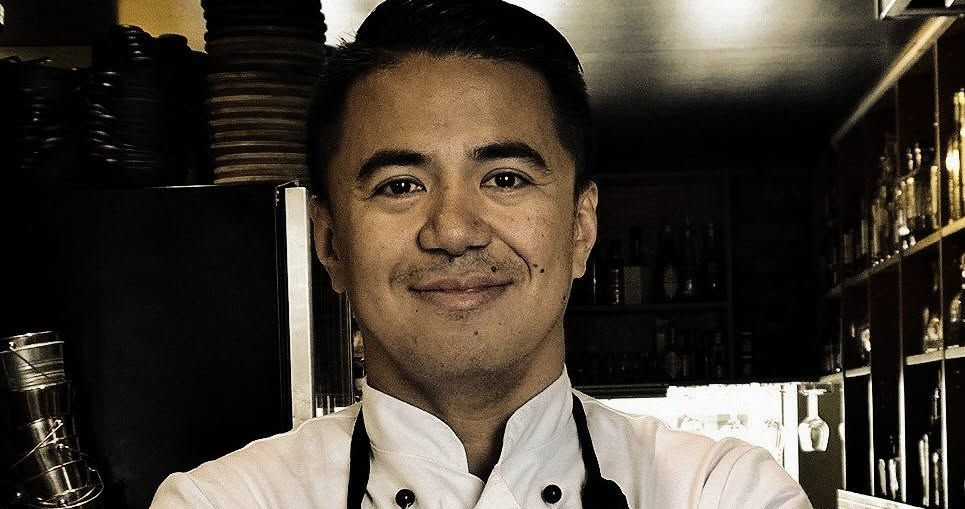
Photo courtesy of Jose Dalisay Jr.
Historians work with documents, dates and testimony that can be tested against other documents, dates and testimony. Novelists work in another register: inside the private rooms of a period, where fear, desire and contradiction exist before they harden into public narrative. Asked what separates the two kinds of work, Jose “Butch” Dalisay Jr. offers a line sharp enough to build an entire theory of fiction around: “All fiction is a lie, an artful lie the writer weaves to get the reader to the truth.”

It is worth pausing on the word lie. Dalisay is not arguing that invention can replace evidence, or that a novelist’s imagination outranks an archive. He is identifying a difference in function. Fiction uses scene, dialogue, interiority, compression and withheld information to make a reader inhabit a temporary reality. Documents can establish what a government ordered, when a law took effect, who was detained and how institutions behaved. A story can ask what fear sounded like inside a room, what compromise did to a friendship, and how an ordinary person learned to live within an extraordinary political order.
Dalisay calls it “history with feeling”: the grand and abstract brought down to human scale, engaging not only the intellect but the heart.
That distinction matters in the Philippines, where disputes over the past are also disputes over memory, language and authority. Literature cannot certify an event merely by representing it, and it cannot promise completeness. Writers select, compress, invent and omit. Yet those limitations do not make literature historically irrelevant. They define its proper contribution. Fiction can enter spaces that official records were rarely designed to contain: hesitation before a decision, shame after a betrayal, private humour during public crisis, and the mixture of conviction and self-interest that turns people into participants in history.
It does not replace the record. It gives the record a pulse.
“All fiction is a lie, an artful lie the writer weaves to get the reader to the truth.” — Jose “Butch” Dalisay Jr.
Jose Dalisay Jr. on the Distance Between Event and Memory
Dalisay speaks about that border with unusual authority. A Filipino fictionist, essayist, poet, playwright and screenwriter, he is Professor Emeritus of English and creative writing at the University of the Philippines Diliman. He has won 16 Carlos Palanca Memorial Awards across several genres and entered the Palanca Hall of Fame in 2000. His work moves between English and Filipino and across fiction, nonfiction, drama and film. His second novel, Soledad’s Sister, was shortlisted for the inaugural Man Asian Literary Prize, while his books have appeared in international editions.


But the credential most relevant here is not an award. It is the relationship between lived experience and literary distance behind Killing Time in a Warm Place. Dalisay began writing the novel in 1986, roughly thirteen years after his imprisonment in 1973. On paper, thirteen years may look like enough time for dispassionate assessment. In practice, 1986 was not simply a point of distance. It was the year the Philippines emerged from the Marcos dictatorship, when political rupture had occurred but many social and emotional consequences remained unresolved.
“Many wounds and issues remained fresh,” Dalisay recalls. The novel became a way of beginning to process what had happened to him and to the country, while entering a public conversation still in progress. A greater distance might have allowed cooler judgment. Proximity gave the work urgency. The book was neither a neutral historical assessment nor a private diary. It was an intervention produced within history, shaped by memory and offered to readers who were themselves deciding what the recent past meant.
This is where the easy opposition between history and literature breaks down. Every act of remembrance occupies a position in time. A historian, witness and novelist may approach the same period with different obligations, but none speaks from outside history. Literature’s value does not depend on claiming superior accuracy. It lies in making the consequences of history imaginable without pretending that imagination is evidence.
Before the Hero and the Villain
Public memory prefers legible categories. It sorts people into heroes, villains, victims, collaborators and perpetrators because collective narratives need recognisable moral positions. Such terms can be politically, historically and legally necessary. Fiction, however, becomes shallow when it mistakes a label for a person.
Dalisay argues that the fictionist must look at an individual before that individual becomes a historical figure. The question is not only what someone did but why: what combination of belief, desire, prejudice, fear and ambition produced a decisive act. “Heroes” and “villains,” he says, are political labels that should not determine how carefully a fictionist constructs a character.
That insistence on complexity should not be confused with moral evasion. To understand motive is not to excuse abuse. To portray a perpetrator carefully is not to erase responsibility. Fiction’s contribution lies in refusing the false comfort that cruelty is committed only by recognisably monstrous people, or that courage belongs only to those untouched by doubt. Political labels identify positions in a conflict; character reveals the unstable human material within them. Literature is most valuable when it makes judgment more informed, not when it makes judgment impossible.
This is also why the claim that literature preserves histories that textbooks cannot must be handled carefully. No textbook represents the whole practice of history. Serious historians work with testimony, material culture, private correspondence, oral accounts and conflicting memories. Literature does not have exclusive access to human complexity. What it possesses is the freedom to compose that complexity into an experience the reader temporarily inhabits. Its knowledge is affective and imaginative, not evidentiary.
The Archive of Ordinary Things
For Dalisay, fiction often begins not with abstractions but with things. He cites William Carlos Williams’s dictum, “No ideas but in things,” then names the objects from which his own stories have grown: a fountain pen, a funeral wreath, a mirror, a broken suitcase.
It is a small, almost domestic inventory, and that is precisely the point. None of these objects carries the obvious historical weight of a treaty or presidential decree. Each can nevertheless hold a social world. A fountain pen may imply education, class, aspiration or bureaucracy. A funeral wreath brings ritual, obligation and grief into one frame. A broken suitcase can contain migration, embarrassment, poverty and departure before the writer explains any of them.
Grand historical narratives organise events around structures and consequences: changes of regime, movements of armies, shifts in power. But an era was never lived as an outline. People encountered it through rations, illnesses, songs, jokes, prices, street corners, domestic arguments and the words available to them. Dalisay observes that even history must keep its “boots on the ground” by attending to diseases, the colour of sand or the course of a river. Fiction keeps those details in motion. An object is not merely displayed as proof of a theme; it is handled, desired, lost, repaired or carried away.
For readers born after Martial Law, this emotional and material texture can provide an entry into an abstraction. A date can establish when authoritarian rule was declared. A novel can stage how authority rearranged the atmosphere of a home, campus or friendship. Dalisay believes emotion heightens attention: worry, fear and desire become imaginative gateways through which a reader begins to understand the larger political term. That is not proof of what happened. It is an invitation to grasp why what happened mattered.
Memory Is Not Evidence
None of this, however, should be mistaken for a claim that fiction offers a more accurate record than history does. Dalisay is candid about the instability at the foundation of his own method: memory, the raw material a novelist draws on even when writing fiction rather than memoir, is not trustworthy. People forget. They embellish. They suppress what is inconvenient and reinterpret what is painful, sometimes without meaning to and sometimes quite deliberately.
Rather than treating this as a flaw to be corrected, Dalisay treats it as a feature to be used. Memory, in his formulation, is an aid to the imagination — a guide, and an unreliable one, but better for being unreliable, because unreliability is what leaves room for ambiguity, for uncertainty, and ultimately for the complexity of character that flat, verified fact cannot generate on its own. A novelist working from shaky memory is not failing at history; he is doing something history was never built to do.
"Memory is an aid to the imagination. It is a guide, but yes, an unreliable one, and it is better that way because it leaves room for ambiguity and uncertainty and therefore complexity of character." — Jose "Butch" Dalisay Jr.
That same instinct extends to what fiction leaves out. Any act of storytelling is also, inevitably, an act of selection — a decision about whose experience enters the frame and whose remains outside it, which means the literary record carries its own blind spots alongside history's. Dalisay does not treat this as scandal so much as condition. The gaps, he suggests, are part of being human: what people leave out, deliberately or otherwise, is not a failure of memory so much as its logic. Complete, unrelenting memory, he believes, would ultimately be unsustainable — simply too much to carry. People need pause, need relief, and the selectivity of memory, imperfect as it is, may be one of the things that keeps a person, or a society, sane.
Language Shapes What Can Be Remembered
Dalisay’s own practice shows how language and form influence memory. Because of his training and what he candidly calls his limitations, he writes fiction and nonfiction prose in English while writing plays and screenplays predominantly in Filipino. Drama, he says, is more immediate: emotion and thought reach an audience with direct force through its natural language. English allows him greater playfulness, speculation, abstraction and distance.
This is not a hierarchy between the two languages. It is one writer’s account of his instruments. Another writer may experience English as intimate or Filipino as analytical; an author working in Hiligaynon, Cebuano, Bikol, Ilocano or another Philippine language will inhabit a different field of rhythm and reference. Language does not simply package memory after it has been formed. It helps determine what can be said, how directly it can be felt and what relationship a speaker establishes with an audience.
A literary work may preserve the temper of a place and period with extraordinary precision and still remain unavailable to readers outside its language. Preservation without circulation protects a memory while restricting the conversation it can enter. This leads to the harder question: not whether translation can reproduce a work without change—it cannot—but what must be carried, what may be altered and who assumes responsibility when a society’s memory crosses into another language.
PART I
Editor’s Note: This is Part I of a two-part In The Mix Magazine feature, History with Feeling: What Jose "Butch" Dalisay Says Fiction Remembers That the Record Cannot. Part I examines how fiction preserves the emotional and human dimensions of history, while Part II turns to translation—what happens when those memories move between languages, readers and literary cultures.
Continue the Conversation
Interested in Philippine literature and translation? Join the In The Mix Readers’ Network to receive selected readings, invitations to literary conversations and opportunities to connect with writers, translators and readers across the diaspora.

Comments