


Mercy Malabanan: OFW Life, Family and Dreams in Italy
A Life in Service, a Story Entirely Her Own
Mercy Malabanan went to Italy to help build her family’s future. Along the way, cooking, table settings and flower arrangements brought her an unexpected online audience—and new ambitions. Behind the carefully chosen images is a mother reckoning with distance, a worker proud of her craft, and a woman learning how much of herself to give.
Words by Mye Mulingtapang | Photos courtesy of Mercy Malabanan

Before she cared for children in Italy, Mercy Malabanan was closely involved in the daily lives of her own children in the Philippines. She prepared their food, laid out their clothes and helped with their schoolwork. There were other people to assist her, but she wanted to do those things herself.
Leaving changed the form of that care. What she once did beside them became something she asked about over the phone.
Her first job in Italy was babysitting. Looking after someone else’s children brought the separation into focus: she was present for another household’s routines while missing the ones unfolding at home.
“Ito yung kapag tinatanong sa akin ng mga nag-i-interview, naiiyak talaga ako,” she says. “Hindi ko mapigil kasi nagiging emotional ako.”
She remembers her children still being young when she left. Her eldest was thirteen. Before departure, she had been a hands-on mother, preparing meals and clothes and teaching them even when tutors were available. Afterwards, relatives took on the care she could no longer provide in person.
“Yung naging kauna-unahan kong trabaho dito is babysitter. Doon ko talaga na-feel na ito yung hindi ko na talaga maibabalik.”
The intimate work of feeding and bathing children in her care made her think about the different routines she had established with her own. At home, she had encouraged independence. In the Italian household where she worked, she encountered a more closely attended way of caring for children. Remembering that experience, she speaks of things she wishes she had done more of herself.
Her advice to parents comes from that regret: show children affection while there is still time to be beside them.
“Although araw-araw nagtatawagan, pero yung presensya, number one iyon, eh. Iyon talaga yung nawala. Yung araw-araw na magkasama kayo, iyon yung hindi na talaga maibabalik kahit kailan.”
They called every day. The connection continued. What disappeared was the ordinary certainty of being in the same place.
The Family Within Her Definition of Success
Mercy does not describe success as a private achievement. When asked what it means to her now, she returns immediately to the family whose future she wanted to improve.
“Para sa akin ang tagumpay ay hindi para sa aking sarili. Nagpunta ako dito para sa pamilya ko, mabigyan ko ng magandang buhay ang mga anak ko. Mapag-aral, makapagtapos ng kanilang gustong kurso.”
Her children have already finished their studies. These are the milestones by which she measures the years abroad.
“So, unti-unti ko nang nararating, ito na yung tinatawag ko na tagumpay. Dahil ang anak ko, napatapos ko na yung panganay ko. Yung pangalawa ko, gagraduate na din.”
Supporting them through their education meant giving them opportunities she associates with the difficulties of an earlier life. She recalls how studying well and obtaining a scholarship could determine whether someone without money could continue in school. She also says she never paid tuition for her children, although she does not explain the arrangement. What she celebrates is their progress and the family effort that helped sustain it.

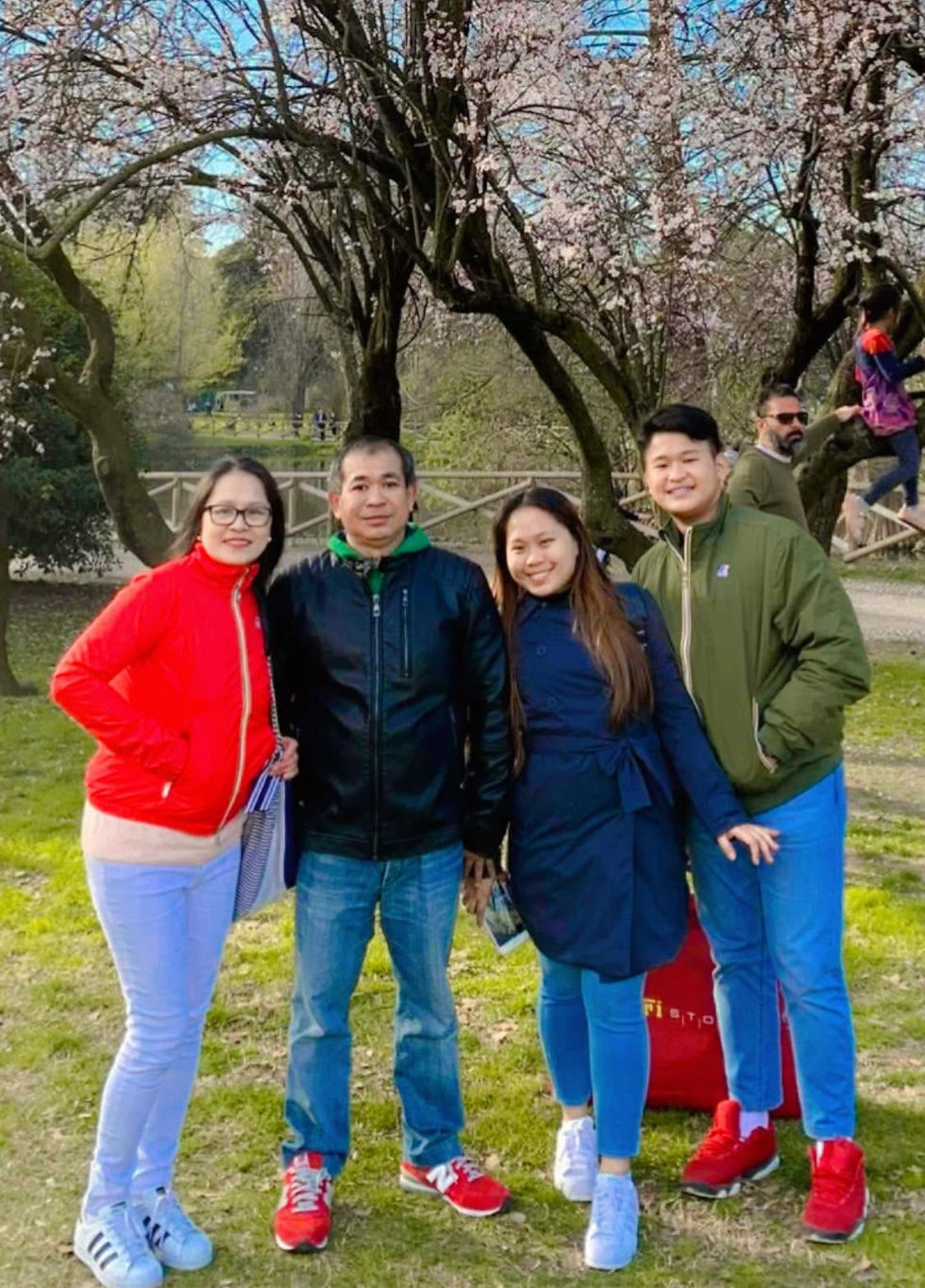
“So pag naging matagumpay yung mga anak ko, matagumpay na rin ako. Iyon para sa akin.”
Before Italy, she had worked in a bank, and her husband had already worked abroad. She remembers teaching the children to appreciate what their parents provided: to eat what was on the table without complaint, and to understand that someone had worked hard to put it there.
Her eldest knew how to cook and iron before she left. Later, grandparents on both sides of the family and other relatives helped guide the children. She credits a sibling’s household, where the example of children who became professionals reinforced the value of education.
Mercy is careful to acknowledge that support. Her children’s achievements belong to a network of people who kept them cared for while she was away.
That gratitude continues to shape how she helps relatives now. A sibling who cared for her children became ill; Mercy offered assistance even though that sibling’s own children were able to provide.
“Hindi siya nanghihingi,” she says. “Pero nag-o-offer pa rin ako dahil bilang pagmamahal, na maibalik ko yung ginawa nila sa akin. Kasi hindi ko naman matatapos yung pag-aaral ng mga anak ko kung hindi dahil sa kanila.”
She rejects the assumption that her family continually asks her for money. Her children, she says, grew up simply and did not make constant demands for things. Giving is something she chooses.
When relatives need help, she may offer an amount she can afford rather than lend the full sum requested. She does not expect repayment.
“Kasi once na nag-expect tayo, magagalit tayo,” she explains. “Ang ginagawa ko, ibinibigay ko na iyon. Hindi ako nag-e-expect na maibabalik pa sa akin iyon.”
Her account of family life contains both absence and reassurance. She missed the daily routines, but she also knew there were people at home who loved her children and shared responsibility for raising them.
Mercy Malabanan And The Uniform She Does Not Disown
Online, Mercy presents cooking, flowers and carefully arranged tables. She wants the work to look considered and distinctive. She chooses images that viewers from different backgrounds might enjoy, and she hopes those images expand how people see Filipino workers abroad.
“Lahat ng ginagawa ko talaga ay gusto kong extraordinary,” she says. “Yung mga table settings, flowers, yung mga pagkaing inihahanda ko talaga, hindi siya pangkaraniwan. Simple siya pero talagang classic.”
She speaks of wanting to raise the public perception of OFWs, to show skills that might disappear beneath a job label. Her language sometimes reflects the hierarchy she is trying to move through: the desire to be seen as someone who has advanced, someone whose abilities deserve recognition.
Yet when an online critic used her uniform to diminish her, Mercy’s response was to defend what it represented.
She recalls the remark that, whatever happened, she would still be a domestic worker. Her eldest had graduated cum laude. To Mercy, the uniform was connected to that achievement.
“Malaki ang utang na loob ko sa uniform na ito kasi dahil dito nakapagpaaral ako ng cum laude.”
She does not disown the work that helped her family.
“Hindi ko ipinagmamakahiya ang pagiging katulong ko dahil, dahil sa pagiging katulong ko, OFW, dito ko natupad ang pangarap ko. Dito kami nagkaroon ng kaunti, at dito ko napapag-aral yung mga anak ko. Na-raise ko sila nang maayos.”
Her pride encompasses both the income and the learning. She studied cooking and applied what she learned. She wants other OFWs to develop their abilities and influence how they are perceived.
“Tayo yung gagawa ng paraan para umangat yung ating personalidad,” she says. “Tayo ang gagawa ng paraan para yung tingin nila sa atin is mabago.”
That wish to be seen more fully runs through her content. The arrangements and dishes offer evidence of her particular interests and craft. The dignity of the work, however, also resides in the daily tasks that never become a video.
Her employment requires availability. She says that when she and Amore are needed on Saturdays or Sundays, they are told. The attractive images sit within a working life organised around another household’s needs.
Mercy wants recognition for what she can do. She also wants the work that made her children’s progress possible to be treated with respect.
How Five Hearts Became an Audience
Becoming a content creator was never part of Mercy’s original plan.
She wanted to improve her family’s life, help her children finish their education and eventually have a business. Cooking was already a passion, shared by her family. Instagram entered the story through a teacher.
“Actually, yung pagiging vlogger, hindi ko talaga ito pinlano,” she says.
While she was learning to cook, her instructor asked whether she had an Instagram account. She did not. He encouraged her to create one and post the dishes they prepared.
“Gumawa ka, Mercy, ng IG. Tapos i-post mo diyan yung mga niluluto natin,” she recalls him saying. “Pag nagkaroon ka ng mga five hearts diyan, masaya na ako sa iyo.”
She began posting. Gradually, people commented and recognised her work. After she changed employers, she continued sharing the food she cooked.
The attention grew into something she had never imagined for herself. She says celebrities began following her, sending messages and speaking with her.
“Never ko itong pinangarap,” she says. “Para sa akin, isa na ring tagumpay ito, nakikilala nila ako through sa aking talent.”
She understands that talent through her faith: something given by God that she can share with others, including mothers with ambitions like her own.
The audience has also encouraged ideas beyond her present employment. People have told her she could open an Italian restaurant. But her earlier dream was smaller and more familiar—a turo-turo, an everyday eatery rooted in her family’s love of cooking.
As she learned more, that ambition developed. She began imagining a small place where she could introduce a speciality of her own, while keeping Filipino food central.
Affordability matters to her. She worries that the label “Italian food” might make some Filipino customers assume they could not afford to eat there.
“Pag nalaman nilang Italian food,” she says, they might think, “Hindi ako kakain diyan. Mahal ’yan.”
She does not want that expectation to keep people away.
There are practical limits too. Others have warned her about the capital required, competition and the expectations attached to an Italian restaurant. She acknowledges that she does not have a large amount of money to invest.
Advice to consider a training centre opened another possibility.
“Magtatayo ako ng training centre sa mga OFW nang libre,” she says. “Ililibre ko iyon.”
She says she has contacts interested in having domestic workers trained by her. She hopes the idea can happen in the coming years. It remains a plan, alongside the eatery and another ambition: a book combining her recipes with the story of how she reached this point.
She says people have offered to help her produce it, including someone in America. What she wants to share is her own version of her recipes and her life as an OFW.
The ideas are still taking shape. Each grows from something she already practises: cooking, teaching through demonstration, and telling people about her experience.
The Life Outside the Frame
Mercy’s online presence is deliberately positive. She does not show every task she performs, and she does not make private difficulties part of her public content.
The first boundary concerns her employer.
“Ang number one kong ayaw ipakita, pangalan ng employer ko,” she says. “Para respeto sa kanya iyon.”
She says filming in the kitchen is permitted: food, table settings and flowers. Private areas remain private. She applies a similar rule to her family.
“Hindi naman tayo perpekto. May mga flaws tayo bilang pamilya. Nagkakaroon tayo ng misunderstanding sa family, problema. Never akong nag-post na may problema ako. Kahit nagagalit ako sa isang tao, never akong nag-post ng parinig.”
For Mercy, being a vlogger carries a responsibility to set a good example. She believes disagreements should not become public displays of hostility.
“At saka yung privacy,” she adds. “Talagang kailangan magkaroon tayo ng privacy, lalong-lalo na sa trabaho, sa employer, sa pamilya.”
The choice helps explain the distance between what followers see and what she knows about her own life. Flowers and meals are things she has decided to share. They do not account for everything she has experienced.
Asked what she would tell the Mercy who first arrived in Italy, she begins with pride. She had not known how to cook Italian food then, and she considers herself stronger now. She hopes other OFWs can recognise something of their own determination in her experience.
But her advice also includes caution.
She says she had not originally intended to go abroad and refers to having been deceived, without explaining the circumstances. Looking back, she would tell herself to be less trusting and more careful about the people she helps.
“At yung pagmamahal, huwag mong ibubuhos,” she says. “Kasi kapag nagbuhos ka ng pagmamahal, at the end, ikaw ang magsa-sacrifice.”
Then comes the instruction that sits uneasily, but honestly, alongside her devotion to family:
“Magtira ka para sa sarili mo. Huwag mong ibigay ang lahat.”
Keep something for yourself. Do not give everything.
Mercy has not stopped valuing generosity. She has learned to place limits around it.
She says she helps students with allowances, partly to return kindness once shown to her. She also describes providing people living on their farm with accommodation, food, rice, water and electricity without charge.
She has generally kept those arrangements out of interviews and away from public display. Part of her vlogging income, which she says varies according to whether content goes viral, also goes towards assistance.
Online requests are treated differently. She does not automatically send money to someone she does not know. She considers whether the person makes an effort and regularly supports or comments on her content.
“Siyempre, tulungan tayo,” she says. “Hindi naman ako sasahod kung walang magko-comment, walang magsu-support.”
She sees that support as reciprocal. It is part of how she decides whom to help, particularly among people who approach her online. She also says she sends Christmas assistance to some mothers and supporters, asking them to keep it private.
Her approach brings together gratitude, judgement and the limits of her resources. She wants to help, but she wants to decide for herself what that help should involve.
The Knowledge She Will Bring Home
Home, for Mercy, remains accessible through people even while she is far from the Philippines.

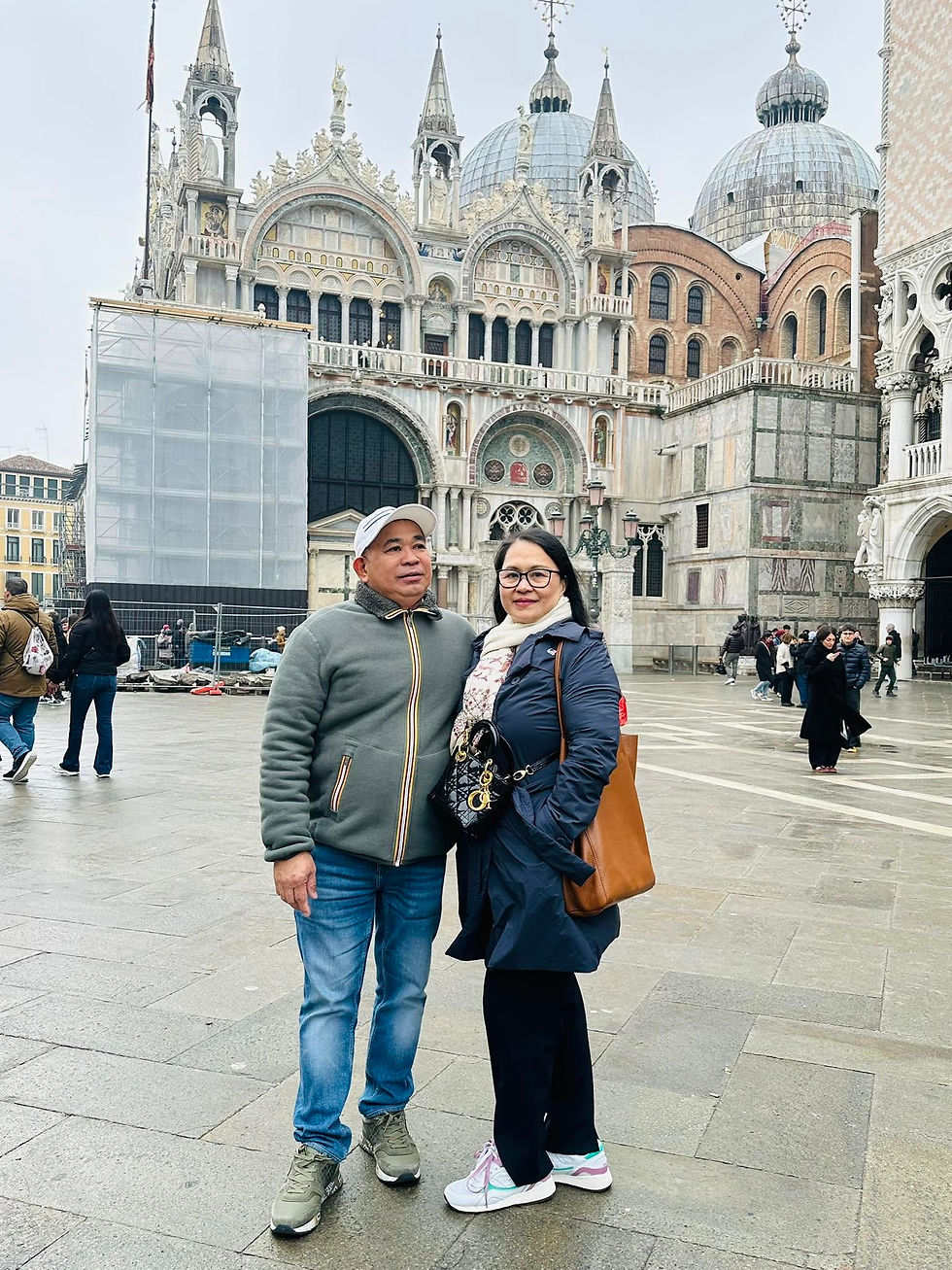

Her husband’s companionship eases homesickness. Conversations with her children and their partners make her feel included in family life. She describes her employer as kind and generous. Feeling loved by the people around her matters.
Church offers another form of belonging.

“Pag nasa simbahan ako, wala akong nararamdamang pagod,” she says. “Hindi ko naiisip na pag-uwi ko may trabaho na naman.”
Friends introduced her to JA1. Listening to the pastor, she says, gives her a sense of relief and reassurance. There, she can cry over sadness and fatigue and leave feeling lighter.
Her faith predates Italy. She remembers parents and an aunt who taught her to draw close to God. The years abroad have deepened that attachment and, in her account, made her braver.
When asked what she wants for herself, she speaks chiefly about health. She hopes to stay well enough to spend more time with her children and eventually care for her grandchildren. Material things occupy less space in her prayers.
She also wants people to recognise qualities that a video cannot easily establish: her respect for others, her faith and the love she carries as a mother.
“Yung pagiging OFW ko, nakikita ng lahat ng tao iyon,” she says. “Pero yung puso ko, hindi nila nakikita.”
She acknowledges mistakes she does not want to revisit publicly. Being known does not mean surrendering every part of her history.
The future she describes most clearly involves bringing her skills home. When she returns for good, she wants her family to taste what she has learned to cook. She wants to arrange flowers with her children, set tables, make videos together and pass that knowledge to the next generation.
“Lahat ng hindi ko nagawa sa mga anak ko, gagawin ko ’yon,” she says.
The childhood years cannot be repeated, but she imagines new ways of being present. Teaching will become one of them.
“Yung mga pagluluto, isi-share ko sa kanila para mamana iyon ng mga apo ko pagdating ng araw.”
She acknowledges that her employer spent money on her education. She also insists on the effort she contributed: the study, fatigue, work and persistence involved in learning.
“Kasi yung natutunan ko dito, hindi iyon mananakaw ng kahit sino. Walang makakaagaw noon kasi akin na iyon, eh. Ako talagang nagpursigi para matuto ako.”
The skills will remain hers when the job ends. They will remain whether her audience grows or disappears.
“Pero kung wala na ang vlog, tuloy pa rin ang buhay,” she says. “Kasi nasa akin naman yung natutunan ko. Hindi naman nila makukuha iyon.”
Mercy hopes the videos will continue. She would welcome people continuing to watch. But the life she imagines does not depend entirely on their attention.
It includes her children tasting a meal she has prepared, learning to arrange flowers beside her, and hearing how she acquired the knowledge she is now passing on. After years of caring across distance, she wants to do those things close enough to show them herself.


Comments