


José Rizal and Cuba: 130 Years Later, an Unfinished Journey
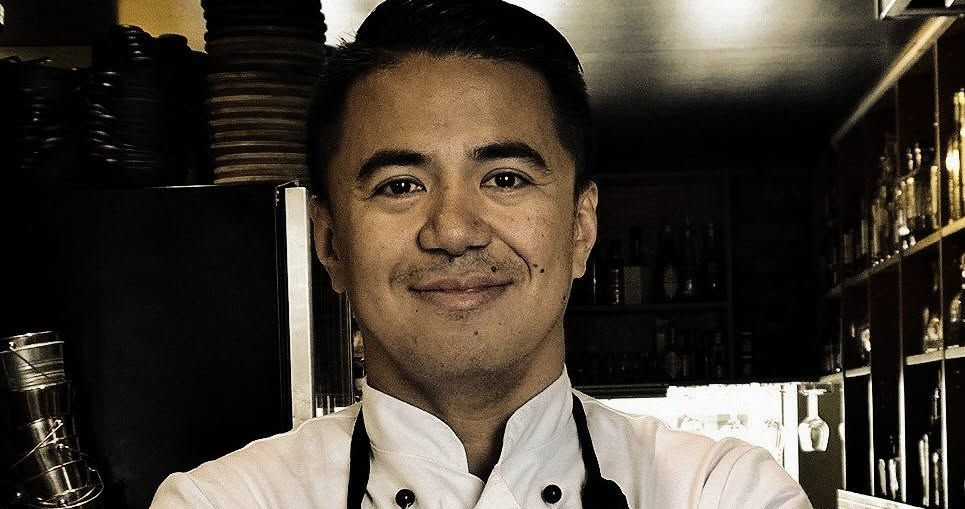
Words and Photography by Chris Sta Brigida-Kopp
Rizal never made it to Cuba. But 130 years later, a Knight of Rizal did.

After a 14-hour journey from Amsterdam via Paris, we arrived in Cuba late at night. Warm,
humid air, occasionally softened by a sea breeze, welcomed us. Havana is six hours behind
Amsterdam, but arriving late at night meant that, according to our body clocks, it was already
well past bedtime.
As much as I wanted to satisfy my curiosity, I didn’t see much during our drive from the
airport to Havana, the capital of Cuba. Very few streets were lit, and the city was mostly
hidden in darkness. But everything changed the following morning as soon as I stepped out
of our hotel.
Suddenly, I was surrounded by neoclassical buildings, elegant colonial mansions, intricate
ironwork, balconies, arcades and elaborate façades. Tall palm trees, Soviet-era cars,
horse-drawn carriages and 1950s American cars filled the streets. It is true what people say
about Havana: you feel as though you have travelled back in time. It is easy to understand
why its historic centre deserves its UNESCO World Heritage status.
Another striking feature you quickly notice is the revolutionary imagery. Cuban flags are
everywhere, while the faces of revolutionary leaders Fidel Castro, Camilo Cienfuegos and
Che Guevara appear on government buildings and other establishments.


As I travelled through Cuba, however, the revolutionary imagery began to fade into the
background, and I started noticing a different, more familiar pattern.
José Martí was everywhere.
The airport where we landed is named after him. His monuments and busts can be found in
town plazas, public spaces and in front of schools.
José Martí is Cuba’s national hero. He was a writer, intellectual and revolutionary who fought
for Cuban independence from Spain in the late 19th century.


As a Filipino, seeing Martí’s face repeatedly produced a strange sense of familiarity. I had
seen this before—in the Philippines, with Dr. José Rizal.
I grew up seeing Rizal in schools, parks, plazas and public spaces. His statues and busts
are everywhere. I encountered his name in books, on street signs and government buildings,
and now even overseas, in Philippine embassy halls, gardens and places named after him.
This encounter with José Martí while travelling around Cuba reminded me so much of José
Rizal.
José Rizal and Cuba: The Journey That Never Happened
It also made me think about José Rizal and Cuba, and the journey to this country that he intended to make but never completed. Would he have seen the same Cuba that I was seeing?
The Cuba of today still contains places and buildings that Rizal could have recognised,
particularly in Old Havana. The city already had a surprisingly sophisticated urban
environment during Rizal’s time. Havana had impressive Spanish colonial architecture and
fortifications, established urban streets, gas lighting and, increasingly, electric lighting.
By the late 19th century, Havana was remarkably technologically advanced for its time. It
had railways, telegraph lines, telephone technology and increasingly modern systems of
urban lighting, making it one of the more technologically sophisticated cities in the Spanish
colonial world.

But these developments would not necessarily have been unfamiliar to Rizal. He had
already experienced the rapidly modernising cities of Manila and Europe, including Madrid,
Paris, Heidelberg and Berlin. What might have struck him instead was how familiar this
modern urban environment could feel in another Spanish colony, thousands of kilometres
from the Philippines.
The similarities went beyond technology. During my visit, I also had the chance to see sugar,
coffee and tobacco plantations—products for which Cuba was well known and which would
have been familiar to Rizal. Sugar and tobacco were also major industries and exports of the
Philippines during his time, while coffee had been an important Philippine export in the
preceding decades before its production declined sharply in the 1890s because of coffee
rust.
He might also have encountered people connected to the Philippines, including people
historically referred to in Cuba as “Chinos Manila.” Their presence was connected to the
long-standing Manila-Acapulco trade and to the movement of people across Spain’s Pacific
and Caribbean colonial networks.
And there is an even more intriguing connection.
During the Spanish colonial period, a jurisdiction in what is now Pinar del Río Province was
established as Nueva Filipinas—“New Philippines.”

For a Filipino travelling through Cuba, discovering that a part of the island once carried the
name Nueva Filipinas feels almost surreal. It is another reminder of how closely connected
the Spanish colonial worlds of Cuba and the Philippines once were.
It made me wonder what Rizal might have thought had he actually reached Cuba. Would the
connections with the Philippines, the shared Spanish colonial heritage, the sugar and
tobacco industries—and even a place called Nueva Filipinas—have made Cuba feel
strangely familiar to him?
But there would also have been a significant difference.
Cuba was in the middle of a war for independence.
In 1896, Rizal had already been in exile in Dapitan for more than four years. As a physician,
he volunteered to serve as a military doctor in Cuba, where there was a shortage of medical
personnel. In July 1896, Governor-General Ramón Blanco approved his request.
Rizal saw the opportunity as a legitimate way to end his exile and confinement.
On 3 September 1896, Rizal boarded the Isla de Panay, bound for Barcelona, Spain. He
was beginning what was supposed to be the next leg of his journey to Cuba, where he had
volunteered to serve as a military physician for the Spanish army.
But while Rizal was travelling toward Barcelona, the Philippine Revolution had erupted.
Spanish authorities began linking him to the rebellion, despite his opposition to the armed
uprising.
On 30 September, as the Isla de Panay continued its voyage, Rizal was ordered to remain
confined to his cabin. He remained there until the ship reached Barcelona on 3 October.
After the required three-day quarantine for all passengers, Rizal was taken off the Isla de
Panay by Spanish authorities early in the morning of 6 October and brought to Montjuïc
Castle, where he was officially detained while arrangements were made for his transfer.
Later that same day, he was transferred to the Colón, which departed Barcelona for Manila
with Rizal aboard as a prisoner.
Rizal reached Manila on 3 Nov as a prisoner, where he was eventually tried and executed on
30 December 1896.
I travelled through the Cuba that Rizal never saw. Yet everywhere I looked, I kept seeing
Rizal in the image of Martí.
Rizal and Martí—two men from opposite sides of the world, both named José. Both born in
Spanish colonies. Both writers, intellectuals and artists. Both dedicated to the betterment of
their people. Both became enduring symbols of their nations.
Rizal never made it to Cuba.
But 130 years later, a Knight of Rizal did.
Rizal’s journey to Cuba began in Manila, passed through Europe, and was supposed to
continue across the Atlantic. Instead, it ended in Europe.
Mine began in Europe.
One hundred and thirty years later, I travelled from Europe to Cuba—the journey Rizal never
completed. In a way, I found myself retracing a path that history had interrupted.
Where Rizal’s journey ended in Europe, mine began there. Where he was prevented from
reaching Cuba, I finally arrived.
Perhaps I did not simply visit Cuba. Perhaps, in a small but deeply personal way, I
completed the journey Rizal left unfinished—not as Rizal, but as a Knight carrying his name,
his memory and his legacy.
About the writer
Sir Chris Sta Brigida-Kopp, KCR is the Order of the Knights of Rizal’s Deputy Area
Commander for the Kingdom of the Netherlands and past Commander for Amsterdam, The
Netherlands.


Comments