


OFW Family Life: The Distance Between Providing and Being There
What does providing for your family cost when earning a better life means living thousands of kilometres apart? Koi Diaz examines the emotional, financial and relational realities of OFW family life—and why success abroad means little if the family does not survive the distance.
Words by Mye Mulingtapang
Photos courtesy of Koi Diaz
The Hidden Cost of OFW Family Life
For generations of Filipino families, migration has been framed as sacrifice with a clear moral logic: one person leaves so everyone else can have more. Koi Diaz does not dismiss that sacrifice. He asks what the story leaves out.
Financial provision, he says, is often the reason a parent goes abroad - but it cannot by itself keep a family strong. The cost appears in the life events that cannot be replayed: birthdays, graduations and ordinary days when a child quietly grows up without the parent who made the sacrifice.
"Ang bilis talaga ng panahon," Diaz says. One day, the parent realizes how much the child has changed and how many moments are gone. Prolonged separation can also widen a rift between spouses. That is why an OFW family needs more than endurance; it needs a shared agreement, a plan and a deadline.
Diaz understands the gap from both sides. He grew up as the child of OFWs, then built a family of his own while living through migration. The lesson was blunt: earning for a family and nurturing one are not the same responsibility.

"You can be a good provider for your family and yet an absentee parent."
The Myth of Instant Success
Filipino society knows that OFWs work hard, but the equation abroad equals success remains stubborn. Diaz points to families fractured by separation and workers who, after years overseas, are still buried in debt. The heroic label can conceal loneliness, guilt, temptation and exhaustion.
"Being an OFW is a blessing. Having an OFW family is a blessing. But a blessing can also become a curse," he writes. What determines the outcome is not the label but the decisions made inside the distance.
His argument is not that families should reject migration. It is that sacrifice without structure is dangerous. A strong OFW family must be built intentionally; it will not survive on remittances and good intentions alone.

Presence cannot be Reduced to a Video Call
Technology closes distance only when families use it with clarity,honesty and intention.
An OFW can call home every day and still remain emotionally unavailable. For Diaz, keeping in touch becomes presence only when communication deepens the bond with a spouse and children.
Distance can even create room for meaningful connection, he says, but technology cannot carry the entire burden. Families also need time together in person. Vacations must be planned, and homecomings cannot be postponed indefinitely.
"You can't just stay abroad without seeing your spouse and children for ten years," Diaz says. Coming home regularly, however, is not enough if communication becomes confusing again the moment the worker leaves. The family needs both: clear communication across the distance and deliberate time together.
Many relationships become vulnerable not because temptation appears only abroad, but because loneliness and uncertainty expose what was never discussed. For Diaz, arguments often begin with a communication problem - and with the absence of a concrete plan.
"Malayo man, maaari pa ding lumalim ang ugnayan ng pamilya."

Sometimes the best way to help is not to help
Money sits at the center of OFW life: remittances, tuition, houses, investments and the expectations of relatives who assume that anyone abroad has money to spare.
Diaz recalls a woman whose seafarer husband supported their two children while they saved carefully. Their difficulty was saying no to siblings and in-laws who repeatedly asked to borrow money.
His advice was direct: set boundaries, even when relatives become angry. Help in a genuine emergency - hospitalization or an accident - but do not treat birthdays, travel or avoidable expenses as emergencies simply because the request comes from family.
"Help with wisdom," he says. Support people who are genuinely trying to improve their lives. But indiscriminate rescue can reward dependency and endanger the household the OFW originally left to protect.
The harder conversation is between spouses. They must agree which parents or vulnerable relatives legitimately need support, how much the couple can give and where the limit lies. Without that agreement, generosity can quietly become a source of resentment inside the marriage.

A Family Project, Not a Solo Journey
An OFW's success is not produced by the worker alone. The family left behind manages the home, absorbs the absence and makes the arrangement possible. Diaz insists that financial planning must therefore be shared, not announced from abroad.
That includes retirement. The worker needs a timeline, savings and a plan for the day income slows down. Otherwise decades of sacrifice can end with neither security nor intact relationships.
The principle is severe but necessary: the family must protect its future before performing success for everyone else.
What separation asks of belief
Koi and his wife are still waiting for the day when distance is no longer part of their marriage—when they can finally build a life together in one place.
"Homecoming is a process, not a destination."
Diaz does not speak about faith from a finished chapter. He and his wife remain in what he calls a waiting season, still hoping to reunite in one place. The pain has not disappeared, and belief has been tested by delay.
His response is not to deny frustration. Waiting for an answer can become exhausting, especially after prayers have been repeated for years. He chooses to see that unfinished period as formative: "Our waiting season can also be the most significant season of our life."
Faith, in this account, is not a guarantee that the desired outcome will arrive on schedule. It is the discipline of trusting that the family is not abandoned while plans remain unresolved.
The most painful question may belong to the children. Parents say, I did this for you; a child may hear, You were not there. Diaz refuses an easy reconciliation. As the son of an OFW, he says he never fully made peace with parental absence, though his relationship with his mother healed over time.
No Easy Repair
His honesty matters. Sacrifice does not erase a child's experience, and good intentions do not automatically repair missed years. The future promise - Anak, nandito na ako - carries weight only if it is followed by presence. Reintegration is difficult because the household has learned to function without the returning parent. Love may remain, but routines, authority and identities have shifted. Coming home therefore requires emotional preparation, not just a plane ticket.
For Diaz, migration should have a deadline from the beginning. Even when the Philippines feels difficult, home is home. Many OFWs return only in retirement; without financial and emotional preparation, the homecoming can expose all the problems that distance postponed.
The family must plan not only how to survive separation, but how to become a family in one place again.

Success means coming home whole
After decades abroad, what remains when the salary stops?
"No amount of success can compensate for failure in the family."
Diaz tells the story of "Tito Rey," a man in his mid-sixties who spent more than three decades as an OFW across the Middle East, Israel and Europe. He provided for children and paid for schooling, yet reached old age without stable work, savings, a home of his own or healthy relationships with his family.
The story is not presented as judgment. It is a warning about what can happen when years abroad accumulate without a plan: broken marriages, resentful children, family trauma and a retirement defined by dependence. Diaz last heard that the man had sought help from the Philippine Embassy in Milan for repatriation.
For Diaz, a successful OFW is therefore not simply the person who earns the most or stays abroad the longest. Success is the ability to protect relationships, prepare for return and ensure that sacrifice produces a life the family can actually share.
"Your sacrifice deserves a better ending."
ABOUT KOI DIAZ
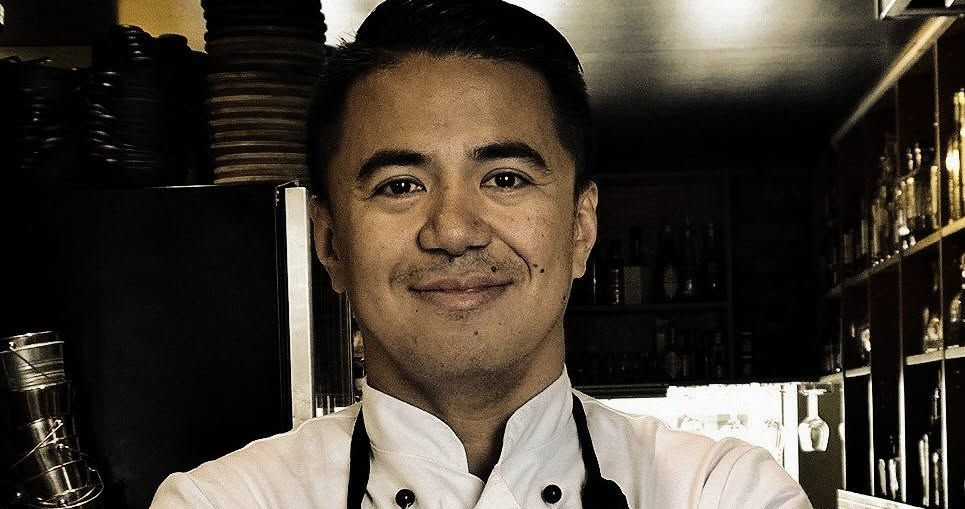
Koi Diaz grew up in an OFW family and later migrated to Italy. After a difficult period marked by addiction and instability, he returned to his faith and began serving in ministry at eighteen. He started leading at The Feast in 2015 and is now one of the Feast District Builders of Europe, overseeing communities in Italy, Malta, Germany and Spain.
He married Daesiry Victoria in 2016. They have a six-year-old son, Jhay-Dee. His book, How to Build a Strong OFW Family, brings together lived experience, practical planning and faith-based reflection.
Connect with Koi
Together, let’s build a strong OFW family wherever you are in the world.
Follow me on Facebook:
FB Page: How To Build A Strong OFW Family
FB Page: Koi Diaz
If you have questions or want to share your own story, email me at: askbrokoi@gmail.com.
Book launching in different cities of Europe starts in September.
BUILD A STRONGER FAMILY ACROSS THE DISTANCE
How to Build a Strong OFW Family brings together Koi Diaz’s lived experience, practical guidance and faith-based reflections for families navigating life across borders.
Or visit Shopee, Lazada, or Tiktok.


Comments